A larva in the eyelid: what that viral clip shows
A four-second video of a fly larva pulled from a swollen eyelid is making the rounds. Here is what it most likely shows, and why you should never try this at home.
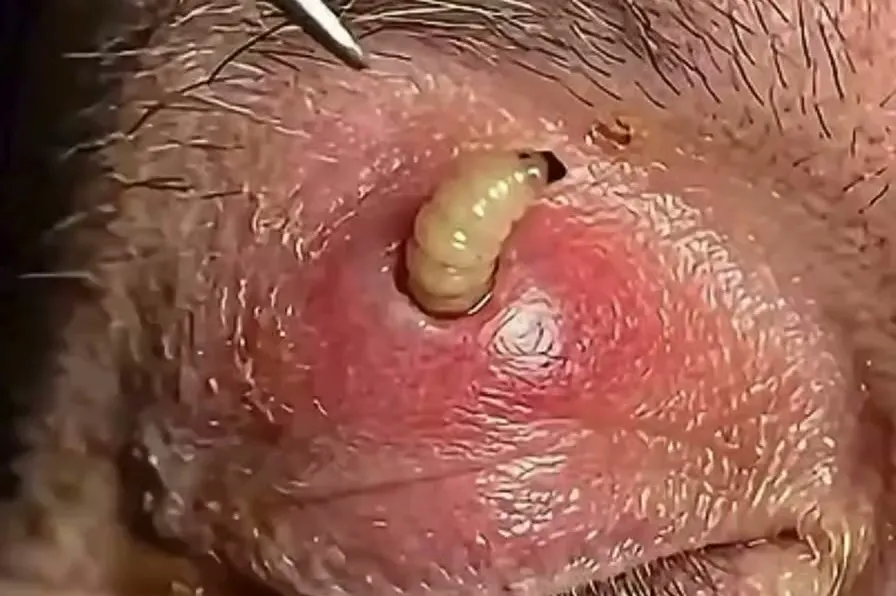
Content warning: close-up medical footage of a larva being removed from skin near the eye.
This short clip has been passed around Telegram and other social feeds: a red, swollen lump above a closed eye, a pale larva poking out of a small hole, and a pair of tweezers drawing it out in one slow pull. It is hard to watch and harder to forget. Here is what it most likely shows.
What you’re looking at
The picture matches a condition called furuncular myiasis: a fly larva living under the skin. From the outside it looks like a boil or an infected spot, but there is one giveaway: a small opening at the top. The larva keeps its rear end at that hole to breathe, which is why the dark tip of the body sits right at the surface.
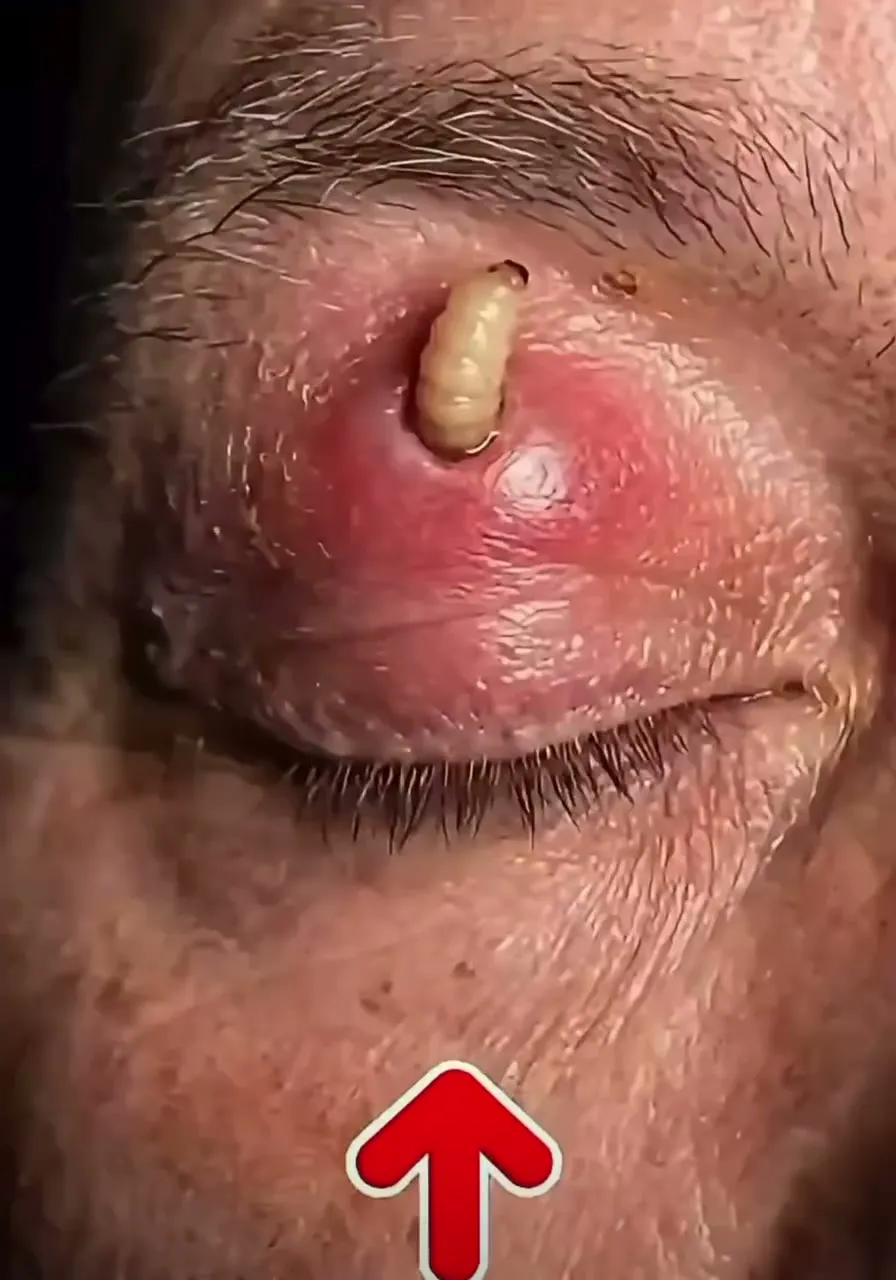
People who have had one often describe itching, a sharp, pricking pain, and, worst of all, the feeling of something moving.
How a fly ends up under the skin
Two flies cause most cases in people:
- The human botfly (Dermatobia hominis), found in Central and South America, does not lay eggs on people directly. It sticks them onto a mosquito or another biting insect. When that insect lands on someone, body heat makes the eggs hatch and the tiny larva slips in through the bite. It can stay for weeks while it grows.
- The tumbu fly (Cordylobia anthropophaga) in sub-Saharan Africa lays eggs on damp ground or laundry drying outside. The larvae burrow in when the skin touches them, often under clothing.
Travelers usually only notice once they are back home, which is why doctors in colder countries see these cases too.
Why you shouldn’t squeeze it
The tweezers in the video make it look easy, but squeezing or yanking can tear the larva. Pieces left behind can cause a strong inflammatory reaction and infection. Larvae are also anchored by small spines, so they resist being pulled.
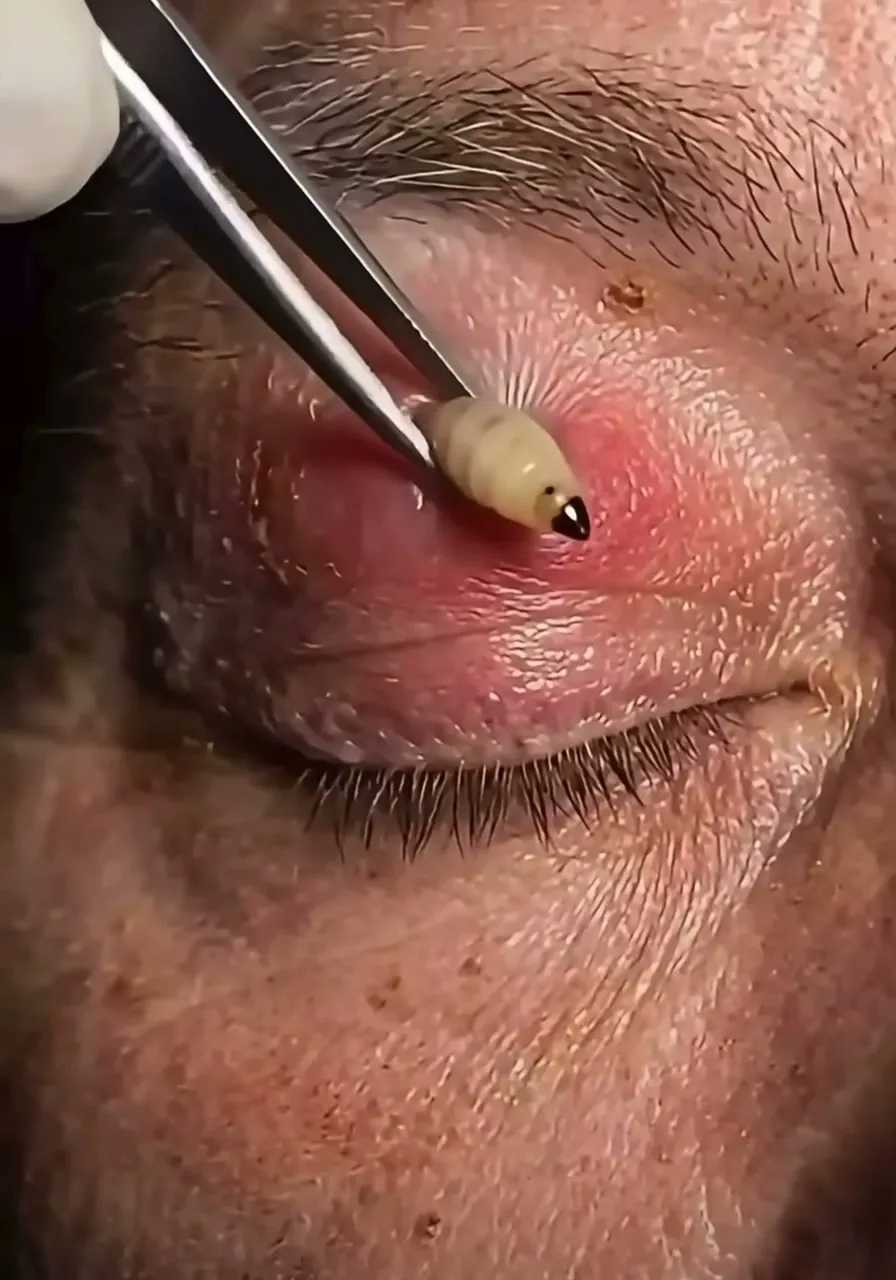
Doctors usually start by covering the opening with an occlusive layer, such as petroleum jelly or a patch, so the larva has to come up for air, then lift it out whole. Some cases need a tiny incision under local anesthetic.
Near the eye, get help fast
A lump like this on or around the eyelid is not a home project. Larvae near the eye can spread into the eye itself, which can damage vision. If you have a boil-like lump with a central hole after a trip to the tropics, especially near the eye, see a doctor or an eye clinic and mention where you traveled.
How to avoid it
- Use insect repellent and wear long sleeves in botfly regions.
- In tumbu fly areas, dry clothes indoors or iron them before wearing. The heat kills the eggs.
- Check any new “boil” that does not behave like one, especially if it has a small hole and you feel movement.
A word about viral clips
Videos like this one spread fast and rarely come with a source. Some are real hospital footage, some are staged, and some are edited or generated. The big red arrow is a clue that this one was made for clicks. The condition itself is real, though, and if it ever happens to you, a doctor is the right person to hold the tweezers.